Are you moving to a new office, is your business closing down, or do you need to vacate a commercial property for the landlord? Then you will likely face more challenges than you initially anticipate. What do you do with old desks and business inventory? How do you ensure that confidential documents are safely destroyed? And when is a commercial property truly ready for transfer?
Clearing out a commercial property involves more than just carrying furniture out. You have to deal with planning, dismantling, waste disposal, and agreements regarding the handover. Meanwhile, you naturally want your daily operations to be disrupted as little as possible.
With good preparation, you avoid unnecessary costs, delays, and surprises during the final inspection. Below, we list the most important points to consider.
In this article you will discover:
There are various situations in which a commercial property must be completely or partially vacated. The most common reason is a move to another location. However, a clearance may also be necessary at the end of a lease, during renovations, or upon the sale of a commercial property.
For example, an office move is not just about moving desks and computers. Old filing cabinets, redundant furniture, and equipment that will not be moving must also be given a new purpose.
A business clearance may also be necessary for an internal relocation, the consolidation of business locations, or the termination of business operations. Even during a reorganization, it may be necessary to dismantle workstations and reconfigure entire departments.
What is the difference between a move and a clearance?
During a relocation, the emphasis is on safely moving company assets to a new location. A clearance, on the other hand, revolves around completely or partially emptying a space. This can include dismantling, removal, cleaning, and repair work.
Sometimes both activities coincide. Part of the inventory is moved along, while the rest needs to be disposed of.
Stefan helps companies with the clearing out offices and other business premisesThis way, you can have the work carried out without having to organize everything yourself.

Good preparation starts with an overview. Before you have furniture removed or start dismantling workspaces, first determine exactly what needs to be done.
Therefore, first walk through the entire company building. Inspect not only the workspaces, but also meeting rooms, storage cabinets, technical rooms, and any warehouses. It is precisely in areas that are rarely used that items often remain standing, and no one knows whether they are still needed.
Additionally, check the terms of your lease or the conditions for the handover. Are you required to vacate the property completely? Do installed fixtures need to be removed? And who is responsible for any repair work?
For a business clearance, it is advisable to designate a single point of contact. This person maintains an overview, coordinates the work with involved parties, and can make decisions during the execution.
Distinguish in advance between items that are coming along and items that are staying behind. This is how you prevent important company assets from being accidentally disposed of.
During a pre-inspection, you assess which work is required to deliver the property as agreed. You look at, among other things, the size of the rooms, existing furniture, accessibility, and any obstacles.
Are there heavy filing cabinets on the third floor? Do large shelving units need to be dismantled? Or is a moving lift required to safely get bulky furniture out? These are things you would rather discover beforehand than during the clearance.
An inventory list helps to record all company assets in an organized manner. Note which items are present, where they are located, and what needs to be done with them. You can distinguish between keeping, moving, selling, donating, and disposing of.
For valuable equipment, also record the inventory value and any serial numbers. This is not only useful for your own records but also helps to track company assets during a move or disposal.
Additionally, take photos of the rooms before the work begins. This way, you will have a clear picture of the original situation and can check later whether everything has been carried out as agreed.

Clearing out commercial premises requires good logistical planning, especially if your business continues to operate as usual.
You want to prevent desks from being cleared away while employees still need their computers or documents. You also don't want hallways filled with furniture while other work is still being done.
Therefore, divide the clearance into phases.
Start with spaces that are no longer in use. Think of empty meeting rooms, storage rooms, or archives. After that, you can tackle the workspaces that are still in use. Schedule the final tasks as close as possible to the definitive departure date.
Take the accessibility of the building into account during the planning phase. Is there sufficient parking space for a truck? Can large pieces of furniture be removed via the stairwell? And are arrangements necessary regarding the use of a goods lift or loading area?
Moreover, for an office move or internal relocation, you coordinate the transport with the layout of the new location. This prevents items from arriving too early or too late.
Don't forget the work after clearing out. Floor removal, cleaning, and any necessary repairs also take time. Therefore, allow sufficient time between the clearance and the final inspection.
Stefan helps think about a practical approach without unnecessary delays. From individual office items to the emptying an entire warehouseWith clear agreements, you know in advance where you stand.
Dismantling workstations might seem simple, but in practice, furniture and fixtures are often more complex than expected.
Think of large corner desks, connected workstations, heavy filing cabinets, and conference tables. Some furniture is attached to walls or floors, while other parts can only fit through doorways or stairwells.
When dismantling workstations, first remove all personal belongings, documents, and electronic equipment. Next, safely switch off the equipment involved and have fixed electrical connections disconnected by an expert where necessary.
It is best to carefully disassemble reusable furniture and keep the parts together. Think of screws, fasteners, and adjustable parts. That way, you can reassemble everything more easily later.
In the case of a complete business clearance, additional work may also be required. For example:
Always check which fixtures may or must be removed. After all, a suspended ceiling or fixed installation may be part of the rented property.
Stefan takes care of it dismantling furniture during an eviction. Also for additional handyman work and the removal of floor finish You can turn to the team.
After years of use, companies often accumulate more furniture and materials than they need. Think of office chairs, filing cabinets, old computers, broken equipment, and leftover office supplies.
When your lease expires or you prepare the business premises for sale, you must determine what happens to these items.
Not every old office chair needs to go straight to waste disposal. Some furniture is still perfectly usable, while other materials are better recycled.
Therefore, first assess the condition of the business inventory and whether it is still usable. Determine which items can still be used within your company and which could potentially be sold or donated.
For items that are no longer usable, you must arrange for suitable disposal.
Be extra careful with electronics. Disposing of old computers is not the same as simply dropping off a cabinet or table. Equipment may contain personal data, business information, or other confidential data. Therefore, ensure the secure handling of this information first.
Different types of commercial waste also require a specific approach. Wood, metal, electronics, and residual waste cannot always be disposed of together.
Do you have a lot of old furniture or do you want to have business waste collected? Via the fast pickup service from Stefan you can have office furniture and other large items removed, among other things.
When clearing out commercial premises, you don't have to simply throw everything away. Reuse can play an important role in the responsible disposal of old office inventory.
Many companies are currently opting for circular office design. This involves using existing furniture and materials for as long as possible, instead of immediately replacing them with new products.
A sturdy desk, for example, can still serve another organization for years to come. The same applies to conference tables, storage cabinets, and office chairs that are still in good condition.
You can sell usable items, donate them, or repurpose them within your own organization. Parts of furniture can also sometimes be reused.
Materials that are not suitable for reuse can be separated for recycling where possible. Examples include wood, metal, paper, and certain plastics.
During clearances, Stefan looks for opportunities for reuse and responsible waste disposal. In this way, usable items are given a second life where possible, and remaining materials are disposed of carefully.
That is not only pleasant for a neatly cleared-out business premises, but also helps to limit unnecessary waste.

In virtually every business premises, there are documents that cannot simply be thrown in with the waste paper. Think of personnel files, customer data, financial records, contracts, and confidential correspondence.
Keep these documents separate during an clearance. After all, you want to prevent personal data or business-sensitive information from unintentionally falling into the hands of others.
Therefore, before the clearance, distinguish between documents that must be retained and documents whose retention period has expired.
Take statutory retention periods into account. For instance, many parts of the Dutch tax records must in principle be retained for seven years. Different periods apply to certain data.
Documents that may be destroyed are best processed by a party that provides secure and verifiable destruction.
Do you want to destroy confidential documents? Then it is not just about shredding paper. The collection, packaging, transport, and processing of the archive must also be carried out carefully.
Stefan offers archive destruction including certificate of destruction on. This allows you to make the disposal and destruction of confidential papers part of the business clearance.
And what about computers and hard drives?
Digital data deserves at least as much attention. Old laptops, servers, USB sticks, and other data carriers can still contain information, even when files have been manually deleted.
Therefore, simply deleting files or emptying the trash is not enough to securely remove sensitive data.
Before disposing of old computers, check which data is still needed and whether backups exist. Then, choose a safe method to erase the data or destroy the data carrier.
Do you want to destroy hard drives? In that case, physical destruction by a specialized processor is sometimes necessary. Ask for demonstrable proof of the destruction performed.
Agree in advance on how the digital equipment will be handled and who is responsible for data security. This prevents confidential business information from being lost or falling into the wrong hands during the clearance.
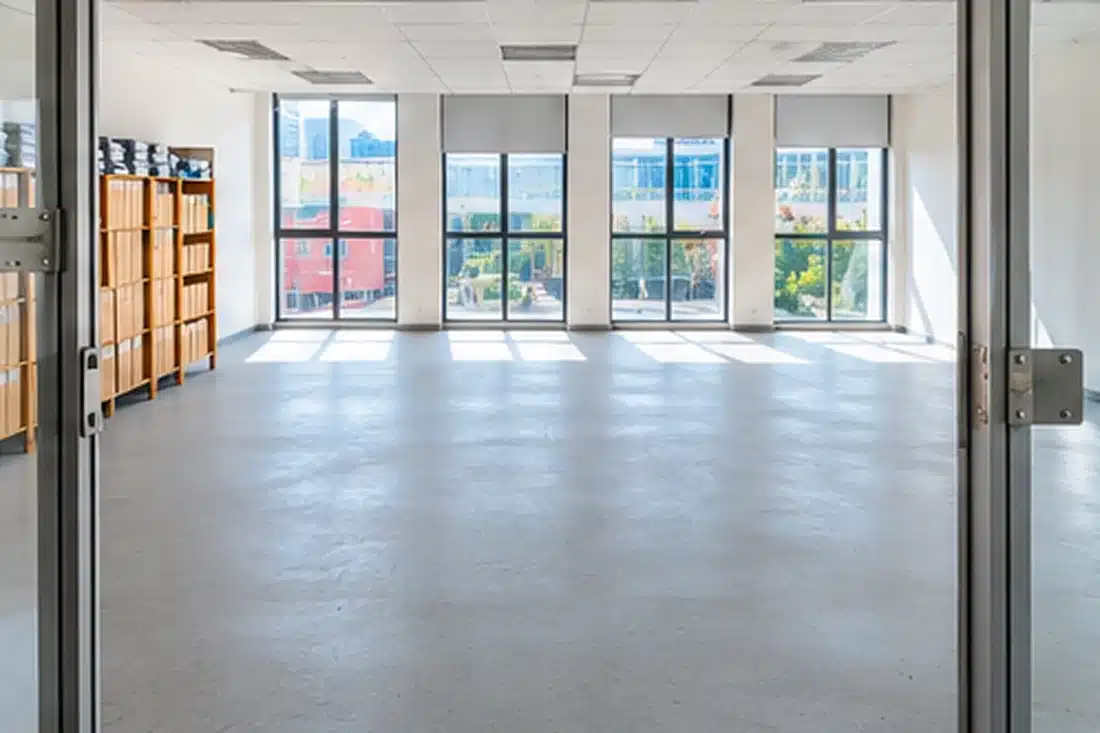
When all furniture and materials have been removed, the work is not always finished. You are required to hand over the business premises in accordance with the agreements you made with the landlord or the new owner.
What exactly constitutes a proper handover varies depending on the situation. In the case of a rental property, the lease agreement, the handover arrangements, and the original condition of the business premises are important starting points.
Sometimes, a broom-clean handover is sufficient. This usually means that all loose items have been removed and the property has been left tidy. Floors, for example, have been swept and rooms are free of leftover waste.
In other situations, more extensive cleaning is expected. This includes cleaning sanitary facilities, kitchens, floors, and other heavily used areas.
Repair work may also be necessary. For example, removing installed floor coverings, filling holes in walls, or restoring certain facilities to the agreed condition.
Always check in advance what the landlord means by delivering the property broom-clean. This way, you avoid disputes regarding cleaning, remaining amenities, or potential damage to the rental property.
When you want to sell the commercial property, the requirements may be different. Preparing a commercial property for sale is not just about emptying it, but also about a well-maintained appearance and a neat presentation to potential buyers.
Stefan can help with the Cleaning commercial premises after an evictionDepending on the agreements, floor removal and minor repairs be part of the assignment.
This way, you don't have to hire a different party for every individual job.
The final inspection is the moment when it is checked whether the business premises have been left in accordance with the agreement.
Therefore, first inspect the property thoroughly yourself. Also check areas that are rarely used during daily operations, such as storage rooms, technical rooms, and any storage areas.
Check whether all company assets have been removed, whether agreed facilities have been restored, and whether no waste has been left behind.
In addition, pay attention to the condition of floors, walls, ceilings, doors, and sanitary facilities. It is best to discuss any damage before the final handover.
Also take photos during the final inspection. This documents how the property has been left.
Don't forget the administrative processing either. Remember to take meter readings, terminate access rights, block access passes, and return all keys.
Have agreements and any points of attention recorded in a business premises handover report or a transfer form. Ensure that both parties know which work has been completed and whether there are any outstanding matters.
By carefully documenting everything, you reduce the risk of misunderstandings or disputes afterwards.
Clearing out commercial premises takes time, preparation, and often considerable physical effort. This is especially true when involving multiple floors, heavy furniture, or a warehouse full of business inventory.
Of course, you can try to organize everything yourself. But who arranges the transport? Who dismantles the large workstations? And what happens to the items that are no longer needed?
In the case of a large-scale clearance, it is often more practical to outsource these activities to a professional clearance company.
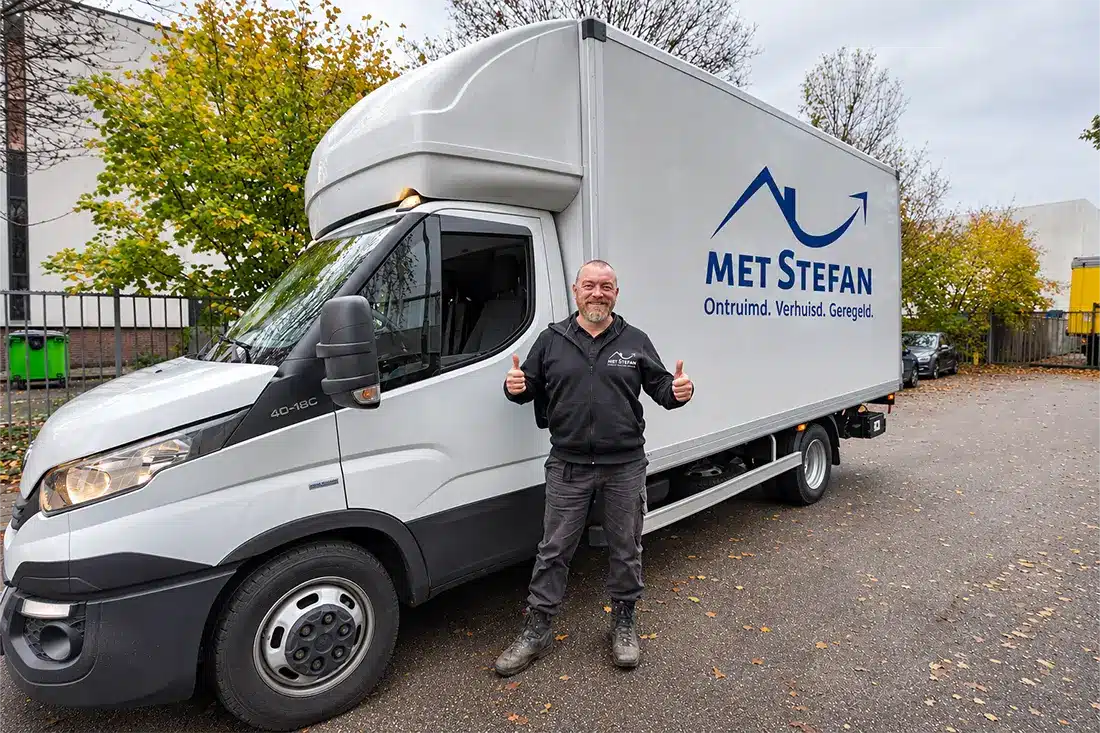
Stefan helps companies quickly and carefully clear out offices, shops, warehouses, and other business spaces. This involves combining various tasks, such as moving and dismantling furniture, disposing of business inventory, floor removal, and cleaning.
Also for additional work, such as minor repairs or the use of a moving lift, you can discuss the possibilities.
The advantage? You have a single point of contact and clear agreements about what needs to be done. This way, you can continue to focus on your business while the clearance is carried out.
The cost of a business clearance depends on, among other things, the amount of inventory, the accessibility of the premises, the necessary work, and the available time.
At Stefan, you can provide photos and information about your business premises in advance. This allows the team to prepare a suitable price indication or quotation.
Need to clear out your business premises? Stefan takes care of it.
Whether you want to clear out a small office, empty an entire warehouse, or hand over a business space in pristine condition: Stefan thinks along with you.
No complicated processes or unclear agreements, but personal contact and a practical approach. From dismantling furniture to the responsible disposal of inventory and leaving your premises broom-clean. Do you have a question first? Please contact us.

Do you want to know what is possible for your business premises? Request a no-obligation quote from Stefan and discuss what needs to be done.
Cleared out. Moved. Done!